
The Biology of Aging: Why Your Skin Needs More Than Water
As we age, two major changes occur in the skin’s architecture:
- TEWL (Transepidermal Water Loss): The skin’s lipid barrier weakens, allowing moisture to evaporate into the air. This leads to the “dehydration lines” that eventually become permanent wrinkles.
- Collagen Degradation: Starting in our mid-20s, collagen production drops by about 1% every year. Without the “scaffolding” of collagen and elastin, skin begins to sag.
A high-quality moisturizer acts as a biological shield, sealing in hydration while delivering active ingredients that signal your cells to repair themselves.
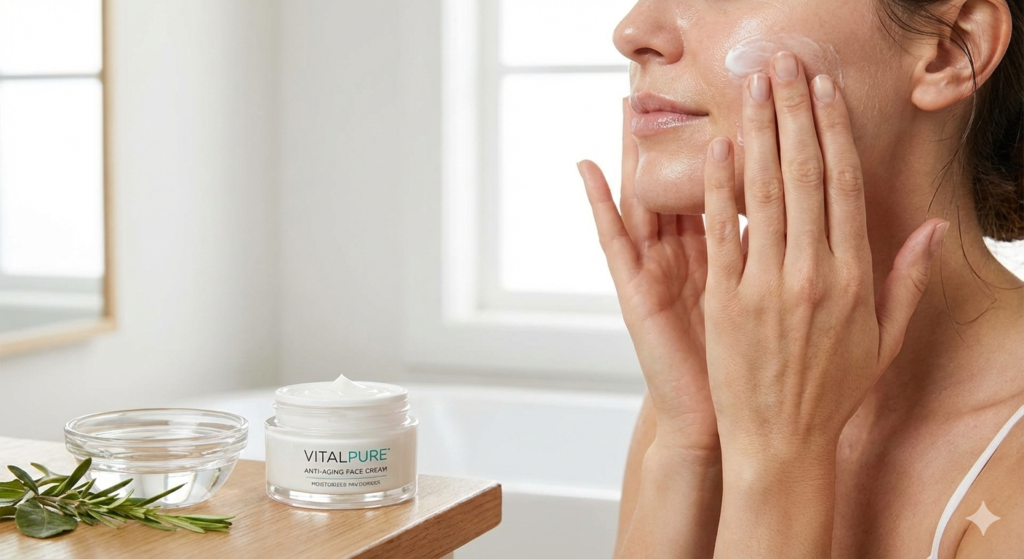
How to Apply Your Anti-Aging Cream: The 3-Step “Pure-Flow” Method
Most people apply cream to dry skin, which actually limits absorption. To get the most out of your anti-aging routine, follow these steps:
Step 1: Prep on Damp Skin
After cleansing, do not towel-dry your face completely. Apply your moisturizer while your skin is still slightly damp.
The Science: Damp skin is more permeable. This allows humectants like Hyaluronic Acid to pull that surface moisture deep into the epidermis rather than drawing it out of your internal tissues.
Step 2: The “Upward-Outward” Motion
Using your ring fingers (which apply the least pressure), massage the cream in upward and outward strokes.
- Why? This counters the effects of gravity and stimulates lymphatic drainage, reducing morning puffiness and “waking up” the skin’s microcirculation.
Step 3: Don’t Forget the “Age-Zones”
Your face doesn’t end at your jawline. Extend your application to your neck and décolletage. These areas have fewer oil glands and are often the first to show visible sagging and sun damage.
4 Science-Backed Ingredients to Look For
To be effective, your anti-aging face moisturizing cream should contain a synergy of these powerhouse ingredients:
- Hyaluronic Acid (HA): A molecule that can hold 1,000 times its weight in water, instantly plumping fine lines.
- Retinol (Vitamin A): The gold standard for cellular turnover. It tells your skin to produce new, fresh cells and collagen.
- Vitamin C: A potent antioxidant that neutralizes free radicals from pollution and UV rays, brightening dark spots.
- Peptides: These are “messenger molecules” that tell your skin it’s time to build more protein, improving elasticity and firmness.
Vital Tips for Visible Results
- Consistency is Queen: Scientific studies show that while hydration is instant, structural changes (like wrinkle reduction) take 6 to 12 weeks of daily use.
- The Golden Rule: Never skip Sunscreen. Even the best anti-aging cream cannot fix damage caused by daily UV exposure. Think of moisturizer as the “repair team” and SPF as the “security guard.”
- Morning vs. Night: Use a lighter, antioxidant-rich cream for the day and a thicker, retinol-based “recovery” cream for the night when your skin’s repair cycle is most active.
Final Thoughts: Live Pure, Age Well
Choosing the right anti-aging face moisturizing cream is an investment in your future self. By understanding the science of hydration and mastering the art of application, you aren’t just chasing youth—you are supporting your body’s largest organ in its mission to keep you healthy and vibrant.
Ready to elevate your skincare? Explore our curated guides on VitalPure.live and start your journey to ageless vitality today.http://vitalpure.live